
Doctor of Osteopathic Medicine (D.O.) - Arizona College of Osteopathic Medicine
The Arizona College of Osteopathic Medicine (AZCOM) integrates the art and science of medicine through patient-centered education under expert guidance.

At AZCOM, our educational mission is dedicated to cultivating competent osteopathic physicians.
Philosophy of Osteopathic Medicine
Osteopathic physicians embrace a holistic philosophy that views the body as an integrated whole, recognizing the interdependence of structure and function. They prioritize individualized care, acknowledging patients' biological, psychological, and sociological needs.
Holistic Approach to Healthcare
As both scientists and practitioners in the healing arts, osteopathic physicians embrace a philosophy that recognizes the body's holistic nature, where structures and functions are interdependent. This perspective drives our commitment to treating patients as unique individuals with biological, psychological, sociological, and spiritual needs, emphasizing our dedication to patient-centered healthcare.
Clinical Experience
Core rotations include family medicine, internal medicine, surgery, pediatrics, psychiatry, osteopathic manipulative medicine, obstetrics/gynecology, and emergency medicine. Additionally, students participate in a selective rotation. These pivotal rotations are essential to your development as a physician.
Ready for Practice
Upon graduation with the D.O. degree, graduates have the skills and experience needed to provide excellent patient care and are eligible for postdoctoral residency training in all fields of medicine.
Why Our Program is Exceptional
- Our Location: We are a small, safe campus located near Phoenix-area hospitals. The Arizona climate offers great weather for most of the year.
- Our Reputation: Students are prioritized and can receive learning and wellness resources through our Student Services programs. We also have board pass rates above the national average.
- Our Faculty: Our faculty are committed to personalized, one-on-one attention with students.
- What We Care About: We love emphasizing the importance of bedside manner, communication, and forming relationships with patients and their families.
- What Sets Us Apart: We offer a state-of-the-art Simulation Center and an integrated ultrasound curriculum. We also offer an articulation agreement for students in our Biomedical Sciences program.
Learn More
Learn more about the requirements and find quick links to relevant catalog content to guide you in your application process. You’ll also find information on WICHE PSEP tuition assistance and scholarships to guide you in your application process.
- Bachelor's degree
- Minimum total and science GPA of 2.75
- MCAT scores
- Two professional letters of recommendation
AZCOM maintains matriculation agreements with the following programs:
- Midwestern University College of Graduate Studies
- Biomedical Sciences Program
- Arizona Christian University
- Arizona State University
Applicants who believe they may meet matriculation agreement eligibility requirements should contact the Midwestern University Admissions Department at 623-572-3275.
The AZCOM curriculum incorporates its mission objectives into its programmatic level educational objectives. Midwestern University Arizona College of Osteopathic Medicine educates students to become qualified osteopathic physicians who provide quality patient care, exhibit professionalism, and serve their communities.
The Mission will be achieved by meeting the following objectives:
1. Incorporate clinical teaching into the curriculum.
AZCOM graduates must be able to utilize the preclinical foundational knowledge to develop critical medical thinking in the last two clinical years of training and beyond. To assist in the development of critical thinking skills, clinical teaching begins in year 1 and continues throughout the curriculum. Upon entering year 3, students will be able to:
- Apply basic science knowledge to the assessment and treatment plan development for a patient.
- Demonstrate medical knowledge and evidence-based understanding on clinical rotations.
- Demonstrate osteopathic evaluation and treatment skills in the supervised care of patients.
2. Incorporate osteopathic principles and practice, including osteopathic manipulative treatment into the curriculum.
Graduates of AZCOM receive instruction in osteopathic principles and practice and osteopathic manipulative treatment in all four years of the curriculum to provide holistic osteopathic medical care, mindful of the ability of the body to be self-healing and the interaction of the whole person (body, mind, and spirit). AZCOM students will be able to:
- Demonstrate osteopathic manipulative evaluation and treatment skills appropriately applied to patient care.
- Perform complete histories and physical examinations of patients, including osteopathic musculoskeletal examinations.
- Define biopsychosocial indicators of health for patients.
- Recognize and utilize indications and contraindications for osteopathic manipulative treatment.
3. Incorporate basic scientific principles.
Understanding basic scientific principles and how research is conducted will contribute to the assessment of the literature for osteopathic physicians to determine whether, when and how to apply the information in the scientific literature to the care of their patients. AZCOM students, by graduation, will be able to:
- Recall scientific principles and their application in medical and scientific literature.
- Apply the scientific basis of structure and function to the concepts of health and disease.
- Accurately interpret laboratory values as evaluated for patients.
4. Provide opportunities for research and scholarly activity for students, residents, and faculty.
Contributions to the body of scientific information are important to AZCOM in respect to its faculty, students, and residents. Providing opportunities for scholarly activity contributes to lifelong independent learning. AZCOM students are provided opportunities to voluntarily participate in research in all four years of the curriculum. Upon graduation from AZCOM, students will be able to:
- Define the need for Institutional Review Board evaluation of human clinical research to protect human subjects.
- Utilize research derived evidence-based information to improve clinical decision making through review of the medical literature.
5. Prepare students for COMLEX-USA Level 1, Level 2 CE, and clinical skills assessment to support completion of the program and graduation.
Successful completion of COMLEX-USA Levels 1, and 2 CE are a requirement to graduate from AZCOM and to be licensed to practice in each of the fifty states. Additionally, the demonstration of clinical skills acquisition is a requirement for attestation that they may proceed to graduate and to be eligible for COMLEX-USA Level 3. All graduates will:
- Demonstrate passage of COMLEX-USA Level 1.
- Demonstrate passage of COMLEX-USA Level 2 CE.
- Demonstrate at least minimum competency of clinical skills using a national standard.
6. Demonstrate student acquisition of the osteopathic core competencies.
AZCOM reviews its curriculum to assure that it provides education to allow all graduates to achieve the osteopathic core competencies to be able to provide quality patient care. AZCOM graduates will:
- Apply knowledge of osteopathic principles and philosophy to the evaluation of patients and skills in the application of osteopathic manipulative treatment when appropriate.
- Apply medical knowledge and accepted practices to the care of patients.
- Show evidence of safe and effective patient care.
- Demonstrate their ability to effectively communicate with patients, their families, and the interprofessional health care team.
- Conduct themselves in a professional manner, with concern for their patients and respect for themselves, their colleagues, and the community.
- Utilize current scientific evidence in the care of patients and the recognition of research methods and the need for continuous improvement in one’s medical knowledge.
- Discuss health care delivery systems and how they can be used to improve individual patient care.
7. Assess the performance of AZCOM graduates.
While it is important to assure that students are achieving the mission objectives while at AZCOM, it is of comparable or greater importance to apply the learning and skills during residency. Graduates will be assessed for:
- Application of the Accreditation Council for Graduate Medical Education (ACGME) core competencies in patient care.
- Demonstration of the ability to provide timely and appropriate care for patients in a hospital setting.
- Demonstration of passage of COMLEX-USA Level 3 in their postgraduate training years.
8. Encourage participation in community service by students, residents, and faculty.
Service to the community assists students in developing and encouraging an understanding of cultural, environmental, and social aspects of health. Encouraging students to work under supervision in varied community settings assists in professional, culturally sensitive development. Students will:
- Demonstrate culturally sensitive care of at-risk unhoused populations.
- Engage in educational programs for underserved populations.
9. Support postgraduate training programs associated with Midwestern University, including osteopathic recognition program development.
The Midwestern University Graduate Medical Education Consortium programs and other affiliated postgraduate medical education programs serve to educate students along with residents in those programs. Hospitals receive support for their residency programs, in the form of simulation training, anatomical dissection experiences, library services, faculty development, among other services. These programs provide core and elective residency-based rotations for AZCOM students who will:
- Demonstrate the ability to work within a graduate medical education hierarchy.
- Develop skills identifying appropriate supervision of clinical performance.
- Match to residencies in their chosen fields of medicine.
10. Equip students to be successful in residency placement.
To practice osteopathic medicine, students must match to residency programs that they will complete after graduation from AZCOM. Students will:
- Demonstrate capability in the core clinical competencies on audition and elective rotations.
- Examine and assess their affinities and skills for specialty residencies.
- Develop the skills necessary to prepare for residency interviews.
- Complete their applications for residency, demonstrating their understanding of the complexities of the application and match processes.
11. Provide faculty and staff development opportunities.
Faculty and staff must be prepared to support students throughout the four-year program. To achieve this, the faculty and staff must develop those skills necessary to support students, including education skills, understanding of the osteopathic profession, and knowledge of the clinical practice environment. Regular evaluations and surveys of faculty and students will help guide the needs, as will environmental and cultural factors that affect student learning. Faculty and staff will:
- Demonstrate student competence in their areas of content through internally written and nationally standardized examination outcomes.
- Demonstrate student competence in their areas of content through nationally standardized clinical examination outcomes.
- Maintain up-to-date content of information provided to students.
12. Provide financial literacy programs and events.
Students incur debt both in undergraduate and osteopathic medical school. It is important for their futures to manage the debt appropriately. MWU AZCOM provides its students with a rigorous program of financial awareness during their program. Students will:
- Evaluate their own debt and its repayment.
- Review information regarding means to limit debt load.
13. Support mental health and wellness for students, residents, and faculty.
Wellness requires a comprehensive approach, including access to care when wellness is not present and recognition of signs of mental stress (e.g., burnout, anxiety) and situations that may indicate lack of wellness. Students, residents, and faculty will:
- Convey information about behavioral health in a nonjudgmental way.
- Use a wellness focus in the care of their own health and in discussions with patients about their health.
- Safeguard patient and peer privacy and confidentiality.
- Strive to recognize the signs of burnout and the steps to alleviate burnout.
In 1995, Midwestern University acknowledged the growing need for physicians in the United States and established AZCOM in Glendale, Arizona. The inaugural class of osteopathic medical students began classes on September 30, 1996, and graduated on June 4, 2000. AZCOM achieved full accreditation status following the graduation of this first class. In 2008, AZCOM increased its class size to 250 to help address the need for more physicians in the state of Arizona.
Mission
Midwestern University Arizona College of Osteopathic Medicine educates students to become qualified osteopathic physicians who provide quality patient care, exhibit professionalism, and serve their communities.
The mission will be achieved by meeting the following objectives:
- Incorporate clinical teaching into the curriculum.
- Incorporate osteopathic principles and practice, including osteopathic manipulative treatment, into the curriculum.
- Incorporate basic scientific principles.
- Provide opportunities for research and scholarly activity for students, residents, and faculty.
- Prepare students for COMLEX-USA Level 1, Level 2 CE, and clinical skills assessment to support completion of the program and graduation.
- Demonstrate student acquisition of the osteopathic core competencies.
- Assess the performance of AZCOM graduates.
- Encourage participation in community service by students, residents, and faculty.
- Support postgraduate training programs associated with Midwestern University, including osteopathic recognition program development.
- Equip students to be successful in residency placement.
- Provide faculty and staff development opportunities.
- Provide financial literacy programs and events.
- Support mental health and wellness for students, residents and faculty.
AZCOM Statement of Values
AZCOM embodies osteopathic academic excellence and scholarship through professionalism, compassion, leadership, and community service.
Pillars of Value
Academic Excellence
Professionalism
Compassion
Leadership
Community Service
The 5-year strategic plan is updated annually with input from a team of faculty, staff, and students. The 2026-2031 AZCOM Strategic Plan includes the following priorities:
- Enhance and support rotation sites for OMS III and OMS IV students.
- Develop and support sponsored Graduate Medical Education (GME) residency programs and develop collaborations with other local GME programs for student training with residents.
- Enhance and support research and scholarly activities by all AZCOM faculty members, including clinical faculty in the MWU clinics.
- Support the growth of the MWU Multispecialty Clinic to enhance student clinical training opportunities with primary care physicians in an interprofessional setting with additional emphasis on osteopathic manipulative medicine.
- Address wellness to prevent burnout among students, faculty, and staff.
- Participate in Clinical Skills Assessment development through the Core Clinical Competency D.O. (C3DO) pilot with the National Board of Osteopathic Medical Examiners.
- Institutional Research
- Institutional Research - Intramural Procedures
- Institutional Research - Extramural Procedures
- Conflict of Interest on Extramurally Funded Programs
- Animal Research
- Human Subjects
- Misconduct
- Use of ORSP Intramural Funds
- Effort Reporting
- Minors in Research Facilities
- Implementation of NSF's Harassment Requirements
- Student Travel Reimbursement Guidelines
AZCOM introduced integrated ultrasound training in 2017, seamlessly incorporating ultrasound into preclinical, clinical, and postgraduate coursework.
- Hands-On Learning: Students engage in hands-on ultrasound experiences across various courses, including Anatomy, Introduction to Clinical Medicine, Osteopathic Manipulative Medicine, and Physiology.
- Comprehensive Training: Students have access to additional ultrasound activities, such as student-led workshops, Ultrafest events, and simulator training, covering a range of scanning modalities, including central line placement, FAST, OB/GYN, nerve blocks, cardiac pathology, and point-of-care ultrasound (POCUS).
Diverse Application: Ultrasound is applied in multiple clinical rotations, including OB/Gyn, Emergency Medicine, Internal Medicine, General Surgery, Critical Care, and more, enhancing students' practical skills and medical knowledge.
Dean's Office:
- Dean of AZCOM: Lori Kemper, D.O., M.S., FACOFP, Associate Professor
- Associate Dean for Academic Affairs: Randall L. Nydam, Ph.D., Professor
- Associate Dean for Clinical Education: Sean Reeder, D.O., AOBFP, Associate Professor
- Associate Dean for Curricular Integration and Faculty Development: Katherine Mitzel, D.O., FACEP, Associate Professor
- Assistant Dean of AZCOM: Shannon Scott, D.O., FACOFP, Associate Professor
Our Faculty:
Our qualified and caring faculty are dedicated to mentoring and guiding students pursuing careers in the health professions.
AZCOM graduates matched to specific residencies in over 30 states. The highest number of matches per state are Arizona, California, Illinois, New York, Texas, Nevada, Florida, Florida, Michigan, Ohio, Pennsylvania, North Carolina, Virginia, and Washington.
View our recent residency matches
Important: Completion of a program of study does not guarantee placement in a residency program, future employment, licensure, or credentialing.
- Female: 51% (130)
- Male: 49% (126)
- Average Age: 25
- Average Overall GPA: 3.58
- Average Science GPA: 3.5
- Average Composite MCAT: 504
- Class Size: 256
- Top Home States: Arizona (82), California (67), Illinois (14), and Utah (4)
All matriculants are permitted a maximum of six years to complete the Doctor of Osteopathic Medicine program. Some matriculants from 2018 and 2019 are still in the process of completing their degrees.
The current graduation rates for AZCOM are:
Matriculation Year | Graduation Rates | ||
|---|---|---|---|
4 Year Degree | 5 Year Degree | 6 Year Degree | |
2020 | 85% | TBD* | TBD* |
2019 | 80% | 92% | TBD* |
2018 | 85% | 93% | 94% |
*TBD: All matriculants are permitted a maximum of six years to complete the Doctor of Osteopathic Medicine program. Some matriculants from 2019 and 2020 are still in the process of completing their degrees.
Midwestern University’s Arizona College of Osteopathic Medicine is part of the Western Interstate Commission for Higher Education (WICHE) Professional Student Exchange Program (PSEP). PSEP allows students outside of Arizona who live in WICHE’s participating states and are pursuing careers in 10 health fields – ranging from optometry to dentistry to veterinary medicine – to apply for participating healthcare programs across state lines and receive substantial tuition support from their home state or territory. Visit the WICHE website for complete details about PSEP and how to apply for reduced tuition.
Visit our Scholarships page to explore other opportunities.
The Arizona College of Osteopathic Medicine is accredited by the American Osteopathic Association (AOA)/Commission on Osteopathic College Accreditation (COCA). COCA is recognized as the accrediting agency for colleges of osteopathic medicine by the United States Department of Education and the Council of Postsecondary Accreditation (COPA). AZCOM is currently accredited through 2028 having received a 7-year accreditation. For further information, please contact the Commission on Osteopathic College Accreditation, American Osteopathic Association, 142 E. Ontario St., Chicago, IL 60611; 312-202-8097.
For further information, please contact the American Osteopathic Association, 142 E. Ontario St., Chicago, IL 60611, or 1-800-621-1773.
Midwestern University is accredited by The Higher Learning Commission, 230 South LaSalle Street, Suite 7-500, Chicago, IL 60604-1413.
Academic Course Catalog
Explore details regarding your specific College/Program.
Pass Rate Statistics
| Academic Year | AZCOM Percent Pass Rate | AZCOM Average Score | National Percent Pass Rate | National Average Score |
|---|---|---|---|---|
| 2023-2024 | 95.18% | N/A | 93.05% | N/A |
| 2022-2023 | 92.92% | N/A | 90.60% | N/A |
| 2021-2022 | 89.52% | 530.49 | 92.20% | 526.19 |
| 2020-2021 | 90.24% | 535.07 | 93.70% | 529.89 |
| Academic Year | AZCOM Percent Pass Rate | AZCOM Average Score | National Percent Pass Rate | National Average Score |
|---|---|---|---|---|
| 2023-2024 | 92.44% | 522.24 | 92.51% | 526.88 |
| 2022-2023 | 93.97% | 555.20 | 94.50% | 552.36 |
| 2021-2022 | 95.85% | 561.28 | 95.06% | 554.71 |
| 2020-2021 | 95.31% | 557.64 | 96.54% | 569.46 |
| First-time Takers in Year | AZCOM Percent Pass Rate | AZCOM Average Score | National Percent Pass Rate | National Average Score |
|---|---|---|---|---|
| January - December 2023 | 96.90% | 570.21 | 94.27% | 555.07 |
| January - December 2022 | 96.77% | 555.77 | 96.25% | 562.58 |
| January - December 2021 | 95.56% | 579.05 | 97.05% | 578.13 |
| January - December 2020 | 97.31% | 583.27 | 97.01% | 575.75 |
Continuing Medical Education
Midwestern University offers a continuity of osteopathic medical education from the first year of medical school to the final year of postgraduate training.
Student Comparisons & Cohort Retention Rate
| AZCOM Students | Male | Female | Other |
|---|---|---|---|
| Hispanic / Latinx | 18 | 25 | <10 |
| White / Non Hispanic | 286 | 221 | <10 |
| American Indian / Alaska Native | <10 | <10 | <10 |
| Black / African American | 17 | 17 | <10 |
| Asian | 101 | 106 | <10 |
| Pacific Islander | <10 | <10 | <10 |
| 2 or more races | 96 | 93 | <10 |
| Undisclosed | 15 | 9 | <10 |
*For demographic information on current AZCOM staff and faculty please Email your request to: AZCOM@Midwestern.edu
| Matriculating Cohort Academic Year (OMS 1 year) | Number of matriculants | Withdrawal or Dismissal | Transfer to different school | Retention Rate |
|---|---|---|---|---|
| 2022-2023 | 251 | 6 | 0 | 98% |
| 2021-2022 | 253 | 4 | 0 | 98% |
| 2020-2021 | 255 | 3 | 0 | 99% |
| 2019-2020 | 252 | 2 | 0 | 99% |
Hear Our Stories
Seth Turner, D.O., AZCOM, Class of 2026
“I want to carry enough humility to say, 'I don’t know,' and the ability to communicate what I do know in terms that others will understand.”

Tracy Middleton, D.O., FACOFP, Chair of Family Medicine, AZCOM
"We are here to support our students and I think that's what's unique about Midwestern University."
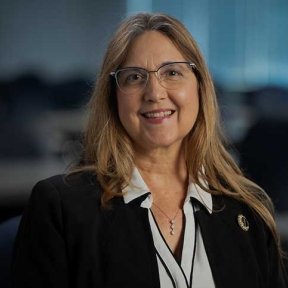
Mark Sakr, D.O., AZCOM, Class of 2008
“The opportunity at Midwestern to work with other healthcare fields and specialties was terrific.”

