
Arizona College of Optometry
At the Arizona College of Optometry (AZCOPT), our dedicated and caring faculty will challenge you to improve your technical skills as they encourage you to focus on your patients.

At the Arizona College of Optometry (AZCOPT), we inspire the next generation of optometrists to be leaders for the future of our profession.
Inspiring Future Optometrists
We cultivate collegial relationships in a hands on teamwork setting that fosters innovative thinking, personalized attention and prepares you for complex clinical care in a variety of settings. We value professionalism, teamwork, and mutual respect and have a reputation for academic and clinical excellence.
Key features include:
- Student Focused: Community orientated collaborative atmosphere with a small student to faculty ratio.
- Collaborative Health Care Model: Exposure to a variety of didactic and clinical experiences that focus on healthcare across disciplines.
- Technology Forward: Innovative technology that is incorporated into the classroom and patient care experiences.
At the Arizona College of Optometry, your gained clinical experiences coupled with your strong foundational knowledge will make you an elite eye healthcare provider.
Why Our Program is Exceptional
- Our Location: We are a small, safe campus located near Phoenix-area hospitals. The Arizona climate offers great weather for most of the year.
- Our Reputation: Our program combines cutting-edge technology - from VR experiences in our optometry labs to our CAREN system in our clinics - with personalized, one-on-one attention in the classroom.
- Our Faculty: From your admissions interview at MWU to the lasting mentorship that extends beyond graduation, students consistently describe our faculty members as compassionate and approachable.
- What We Care About: MWU delivers exceptional hands-on learning opportunities through its student-run clinic. It stands out as one of the only universities in the country that offers real-world experiences in ophthalmology.
- What Sets Us Apart: MWU graduates consistently excel on all three parts of the NBEO exam, earning a reputation for consistently scoring above the national average.
Your future starts at AZCOPT
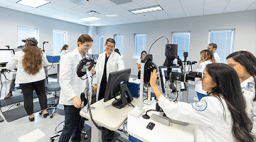
Comprehensive Training
Thorough curriculum prepares students in an interprofessional healthcare environment to learn about treating the whole patient.
Classroom setting that encourages collaboration among faculty and students to further enrich the educational experiences.
Early exposure to optometric technical skills in a large preclinical laboratory that fosters student to student interactions.
Latest technology used to enhance learning outcomes and have a reputation for excellence on the national board examinations.
The first year is focused on health sciences, optics, and anatomy. Second and third year introduces ocular disease, vision sciences, and specialty services. Part time clinical exposure starts in the second year and ramps up to full time in the fourth year.
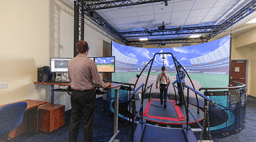
Clinical Experience
Receive hands on training with the latest technology working alongside optometry and ophthalmology clinical faculty at the Eye and Therapy Institutes.
Eye Institute: Students provide primary eye care to patients of all ages while also experiencing specialty clinics such as contact lens, prosthetics, ophthalmology, low vision, pediatrics and ocular disease.
Therapy Institute: Students see patients in an interdisciplinary healthcare setting with unique technology to enhance treatment in settings such as sports vision, acquired brain injury, and vision rehabilitation.
External rotations may include veteran administration hospitals, public health service hospitals and specialty and/or private practices or clinics.
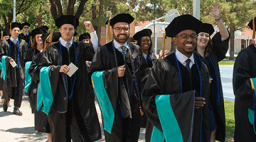
Ready for Optometry Practice
Upon completing our rigorous four-year program, you will be:
Fully equipped to seamlessly transition into optometry practice
Armed with competence, confidence, and competitiveness as a skilled clinician.
Poised to embark on your journey as an integral member of tomorrow's healthcare team.
Learn More About the Program
Learn more about the requirements and find quick links to relevant catalog content to guide you in your application process. You’ll also find information on WICHE PSEP tuition assistance and scholarships to guide you in your application process.
- Bachelor's degree from a regionally accredited institution
- Completion of course prerequisites with a grade of C or higher
- Minimum overall cumulative GPA and science GPA of 2.75 on a 4.00 scale
- Submission of the results of one of the following entrance examinations: Optometry Admissions Test (OAT), Medical College Admissions Test (MCAT), Dental Aptitude Test (DAT), Pharmacy College Admissions Test (PCAT), or the Graduate Record Exam (GRE).
- A competitive test score (at least at or above the mean score for each exam) is recommended of all applicants.
- In order to be considered for the class to be admitted in the fall of each academic year, the entrance examination must be taken and results submitted by April 30th of the year of matriculation.
- Entrance exam scores must be earned no more than five years prior to the planned enrollment year.
- Two letters of recommendation. One letter must be from a practicing optometrist
Students must apply for admission via OptomCAS by April 1st.
Due to the large number of applicants and the limited number of seats available, students are strongly encouraged to complete the application early in the cycle.
AZCOPT will consider completed applications on a first-come, first-served basis until all seats are filled.
The Optometry program in Glendale, AZ, has established articulation agreements with select institutions.
Note: Students must meet all application deadlines for the professional program of interest. A guaranteed interview does not guarantee admission into the professional program. For detailed information and eligibility criteria, please refer to the full articulation agreements.
- Arizona State University Articulation Agreement: Beginning with the class matriculating in Fall 2027, Midwestern University's Optometry program in Glendale, AZ agrees to guarantee acceptances (seats) or interviews for qualified Arizona State University applicants.
- Aurora University Articulation Agreement: Beginning with the class matriculating in Fall 2023, Midwestern University’s Optometry program in Glendale, AZ agrees to guarantee interviews for qualified Aurora University applicants.
- Bradley University Articulation Agreement: Beginning with the class matriculating in Fall 2026, Midwestern University's Optometry program in Glendale, AZ agrees to guarantee interviews for qualified Bradley University applicants.
- Grand Canyon University Articulation Agreement: Beginning with the class matriculating in Fall 2015, Midwestern University's Optometry program in Glendale, AZ agrees to guarantee interviews and reserve 2 acceptances for qualified Grand Canyon University University applicants.
- Greenville University Articulation Agreement: Beginning with the class matriculating in Fall 2024, Midwestern University's Optometry program in Glendale, AZ agrees to guarantee interviews for qualified Greenville University applicants.
- Illinois State University Articulation Agreement: Beginning with the class matriculating in Fall 2026, Midwestern University's Optometry program in Glendale, AZ agrees to guarantee interviews for qualified Illinois State University applicants.
- Northern Illinois University Articulation Agreement: Beginning with the class matriculating in Fall 2026, Midwestern University's Optometry program in Glendale, AZ agrees to guarantee interviews for qualified Northern Illinois University applicants.
- Ripon College Articulation Agreement: Beginning with the class matriculating in Fall 2026, Midwestern University's Optometry program in Glendale, AZ agrees to guarantee interviews for qualified Ripon College applicants.
- University of Iowa Articulation Agreement: Beginning with the class matriculating in Fall 2027, Midwestern University’s Optometry program in Glendale, AZ agrees to guarantee interviews for qualified University of Iowa applicants.
- University of New Haven Articulation Agreement: Beginning with the class matriculating in Fall 2026, Midwestern University's Optometry program in Glendale, AZ agrees to guarantee interviews for qualified University of New Haven applicants.
- Wheaton College Articulation Agreement: Beginning with the class matriculating in Fall 2027, Midwestern University's Optometry program in Glendale, AZ agrees to guarantee interviews for qualified Wheaton College applicants.
Mission
The mission of Midwestern University Arizona College of Optometry is to educate future optometrists and residents in an interprofessional healthcare environment. The College fosters professional attitudes and behaviors that encourage lifelong learning, scholarship to serve the needs of the public, and a commitment to improve the health and well-being of society.
Vision
The Arizona College of Optometry's vision is to:
- Deliver the premier optometric educational experience utilizing our unique multi-health professional setting and cutting edge technology.
- Provide our students with the knowledge and skills to deliver the highest level of professional, ethical and compassionate eye and vision care.
- Promote lifelong learning, community outreach and innovative research.
Goals
The 9 goals of the Arizona College of Optometry (AZCOPT) are listed below:
- Ensure that students have a strong foundation in basic visual and clinical sciences by providing broad and innovative educational opportunities
- Plan and develop a diversity of clinical experiences to enable students to enter the practice of optometry
- Support and nurture an environment of intellectual inquiry and research activity by students, residents and faculty
- Promote interprofessional educational programming to develop students' appreciation of other health care professions
- Promote student involvement in community service
- Maintain and advance high quality residency programs
- Perpetuate an Eye Institute that serves the eye/vision care needs of the community
- Provide lifelong learning activities and support services to the optometric profession and the public
- Maintain the financial viability of the College
Our thorough curriculum prepares students in an interprofessional healthcare environment to learn about treating the whole patient.
- First year is focused on health sciences, optics, and anatomy.
- Second and third year introduces ocular disease, vision sciences, and specialty services.
- Part time clinical exposure starts in the second year and ramps up to full time in the fourth year.
Midwestern University’s Arizona College of Optometry is part of the Western Interstate Commission for Higher Education (WICHE) Professional Student Exchange Program (PSEP). PSEP allows students outside of Arizona who live in WICHE’s participating states and are pursuing careers in 10 health fields – ranging from optometry to dentistry to veterinary medicine – to apply for participating healthcare programs across state lines and receive substantial tuition support from their home state or territory. Visit the WICHE website for complete details about PSEP and how to apply for reduced tuition.
Visit our Scholarships page to explore other opportunities.
The Midwestern University Arizona College of Optometry has been granted the accreditation classification of ACCREDITED as of April 24, 2013 by the Accreditation Council on Optometric Education (ACOE), of the American Optometric Association (AOA), 243 N. Lindbergh Blvd., St. Louis, MO 63141-7881; phone 314-991-4100. "Accredited" is the classification granted to a professional degree program that generally meets the standards for accreditation.
Midwestern University is accredited by The Higher Learning Commission, 230 South LaSalle Street, Suite 7-500, Chicago, IL 60604-1413.
Academic Course Catalog
Explore details regarding your specific College/Program.
Hear Our Stories
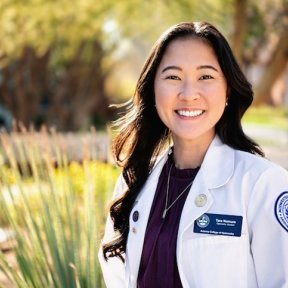
Tara Nomura, O.D., AZCOPT, Class of 2024
“Midwestern has an interprofessional approach to healthcare, integrating the different programs and emphasizing the need to work together to treat a patient. I want to be able to provide this experience to my patients, ensuring they are taking care of all aspects of their health.”
Kandyse Flanigan, O.D., AZCOPT, Class of 2025
"We've learned how to become a better doctor."

Bryan Grossman, O.D., AZCOPT, Class of 2021
"I work in a really high-paced medical practice, and without the right training, I don’t know if I could keep up with what I’m doing right now.”

College Stats
NBEO Part II
Pass rate on NBEO Part II (Dec. 2025).
NBEO Part III
Above the national average on NBEO Part III (July-June 2024-2025).
NBEO Part I
Above the national average for NBEO Part I (March 2025).